
News
EcoRail: Rethinking Solar Mounting Design for Commercial and Industrial Projects
August 11, 2026Mounting systems are often treated as a secondary consideration in commercial solar projects, specified late in the design process and expected to adapt to the structure they sit on.
In practice, they shape more of the outcome than is immediately visible. Installation time, structural performance, water management and overall finish are all influenced by how panels are supported and secured.
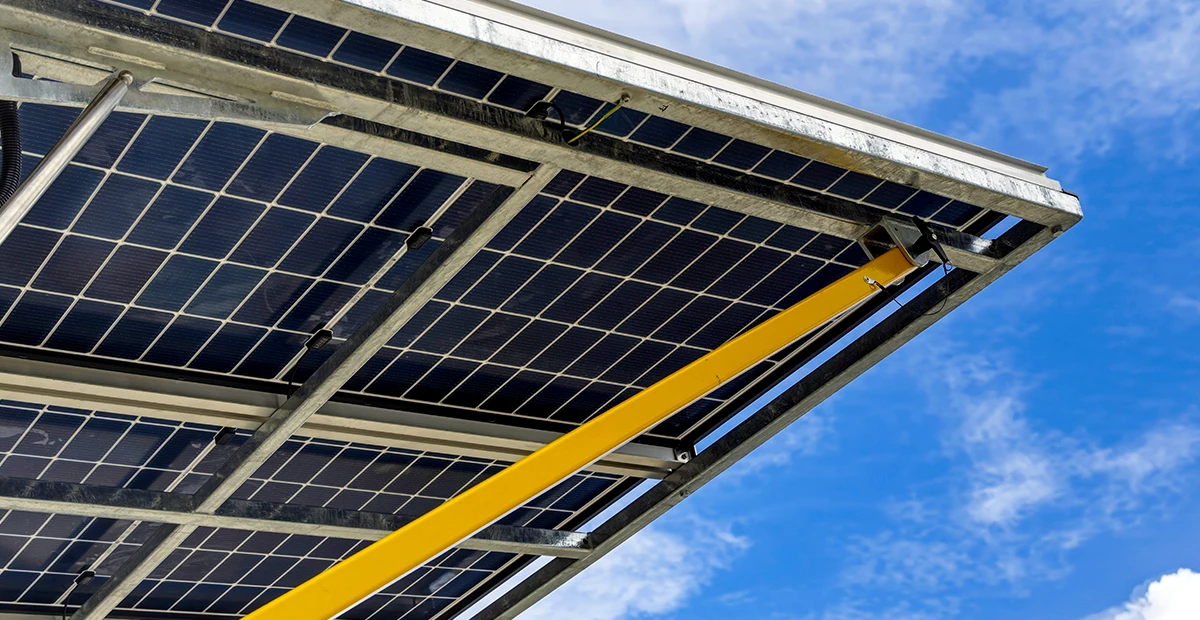
EcoRail is CSE Linked’s solar mounting system, designed as an integrated rail profile that allows framed panels to be positioned and secured within the structure itself, rather than fixed through multiple brackets and clamps.
This approach treats mounting as part of the system design rather than a collection of components, aligning more closely with how commercial installations are delivered at scale, where consistency, repeatability and structural performance are key considerations.
Reducing installation complexity at scale
In large commercial installations, installation efficiency is not just a matter of labour cost, it directly affects project timelines, coordination with other trades and overall delivery risk.
Traditional mounting systems rely on multiple components working together, with each panel requiring alignment, clamping and fixing. This introduces variability across the installation, particularly as system size increases.
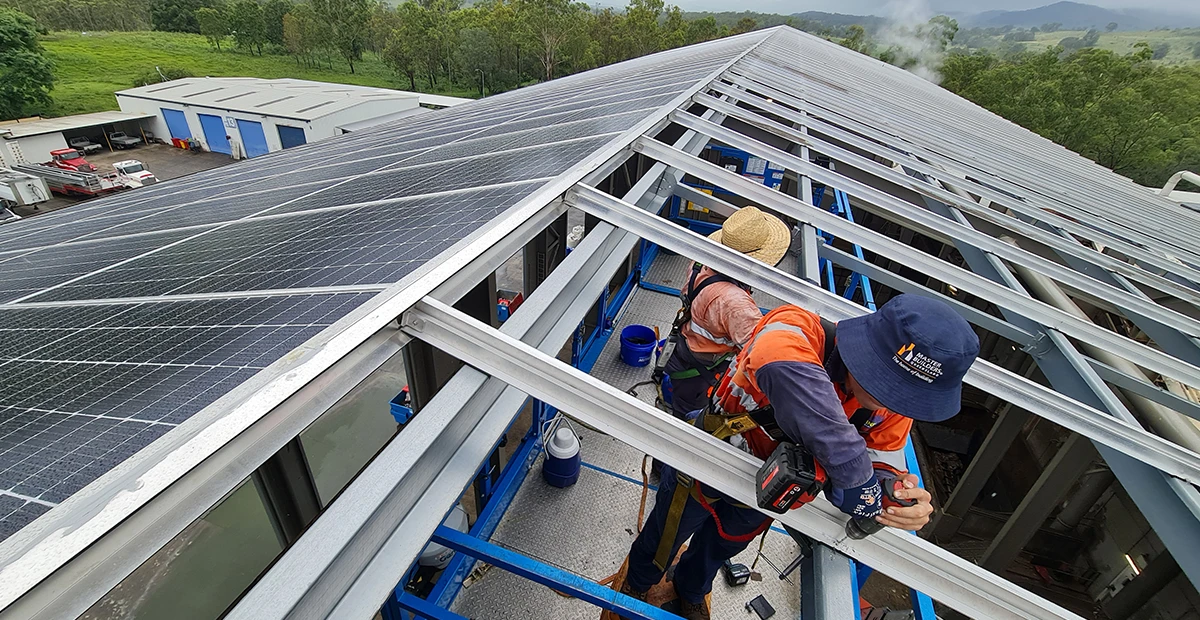
EcoRail simplifies this process by shifting how panels are installed. The rail profile is designed to match standard framed panels, allowing modules to be positioned and secured within the rail itself. This reduces the number of individual fixing steps required on site and creates a more consistent installation process.
At a practical level, this results in:
- Fewer components handled during installation
- A more repeatable installation method across large arrays
- Reduced adjustment and alignment time at panel level
Because these efficiencies are embedded in the system design, outcomes are less dependent on installation variability and more consistent across the project.
Supporting structural consistency and load distribution
Mounting systems are also responsible for how loads are transferred between panels and the supporting structure.
EcoRail distributes panel loads along the rail rather than concentrating them at multiple discrete fixing points. This supports a more uniform connection across the array, which becomes increasingly important in exposed or elevated installations such as carparks, walkways and shade structures.
By integrating panel support into the rail itself, the system contributes to the overall structural performance of the installation rather than sitting as a separate layer. This is particularly relevant where wind loading, vibration or long spans need to be considered as part of the design.
Integrating water management and finish
EcoRail incorporates water management within the rail design itself, directing runoff and allowing the array to function more like a continuous surface. This supports a cleaner finish and reduces uncontrolled water flow across the structure.
Ultimately, this improves how the installation integrates with the surrounding asset. It also reduces the need for secondary drainage considerations, which are often introduced after the fact in conventional systems.
Maintaining compliance without added complexity
Electrical and structural compliance are fundamental to commercial solar design, but they can introduce additional installation steps if not considered early.
EcoRail incorporates an integrated earthing arrangement within the system, allowing compliance requirements to be met as part of the mounting design rather than through additional components or rework during installation.
This reduces installation complexity while maintaining alignment with required standards, particularly in larger or repeatable deployments.
Designed for compatibility and repeatability
EcoRail is designed to support standard framed panels and can be applied across a range of structural types. This allows system designs to be replicated across different areas of a site without introducing variation in mounting approach, particularly useful for maintaining consistency across multiple structures or staged developments
For operators and project teams, this consistency supports more predictable installation outcomes, simplifies planning and reduces the need for redesign as projects scale.
A more integrated approach to solar design
Mounting systems influence how a project is installed, how it performs and how it integrates into the broader site.
EcoRail reflects a more integrated approach to this part of the system. By combining panel support, fixing methodology and water management into a single design, it reduces the number of moving parts while maintaining structural and operational integrity.
For operators, this translates to a system that is easier to deliver at scale, more consistent across installations and better aligned with the practical requirements of commercial and industrial projects.