
News
EcoPort: Integrating Solar Generation into Everyday Infrastructure
August 27, 2026Many commercial and industrial sites are already operating within established layouts, where parking areas, accessways and buildings are designed to support daily operations. This leaves limited opportunity to introduce new infrastructure without affecting how the site functions.
For solar, this means the focus often shifts from finding space to using existing space more effectively.
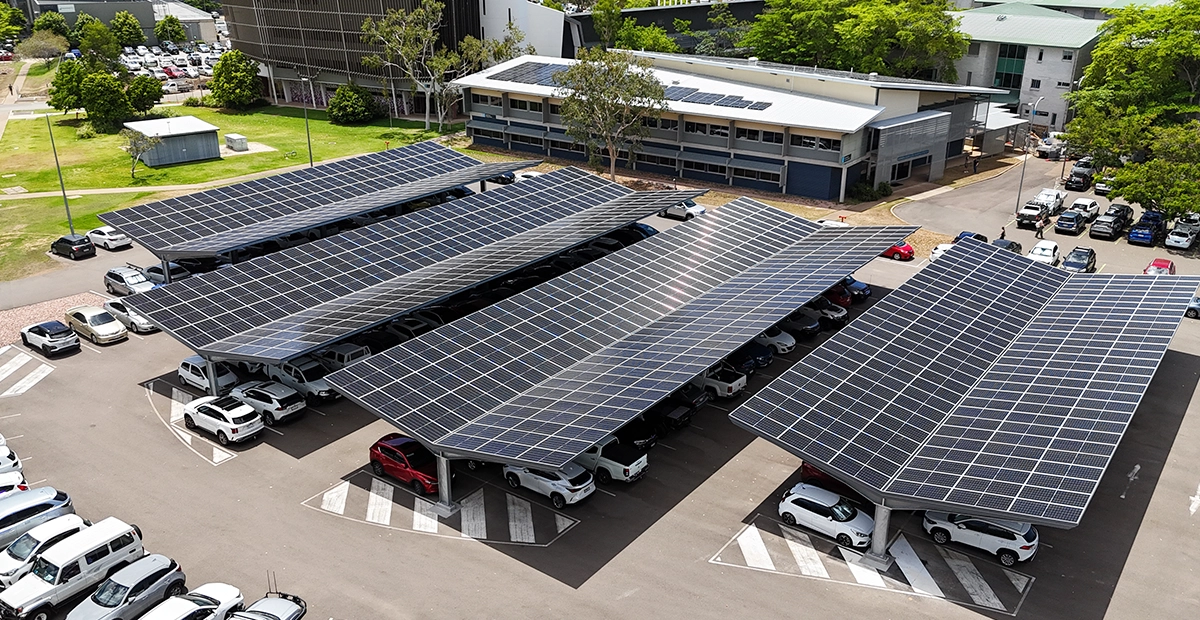
EcoPort has been developed with this in mind. It is a solar-integrated carport system that combines vehicle shelter with onsite energy generation in a single structure, allowing parking areas to contribute to a site’s energy profile without changing their core purpose.
By integrating solar directly into everyday infrastructure, EcoPort enables the same footprint to support both operational use and energy generation, without introducing additional spatial demand.
Linking physical space to energy output
One of the defining characteristics of EcoPort is the way it translates parking layout into generation capacity.
Each column is designed to accommodate up to three vehicles while supporting solar PV, allowing systems to be configured in line with the size and structure of the car park. This creates a clear relationship between available space and potential energy output during the planning phase.
Configurations can support up to 9 kW of solar PV per column, with smaller arrangements delivering proportionate output depending on panel count. Systems can then be expanded progressively, providing a structured pathway to increase capacity as requirements evolve.
Rather than requiring dedicated land or structural retrofitting, generation is built into an area that is already part of the site’s footprint.
Designed as a complete system
EcoPort is engineered as a unified structure, where solar generation is considered as part of the design from the outset.
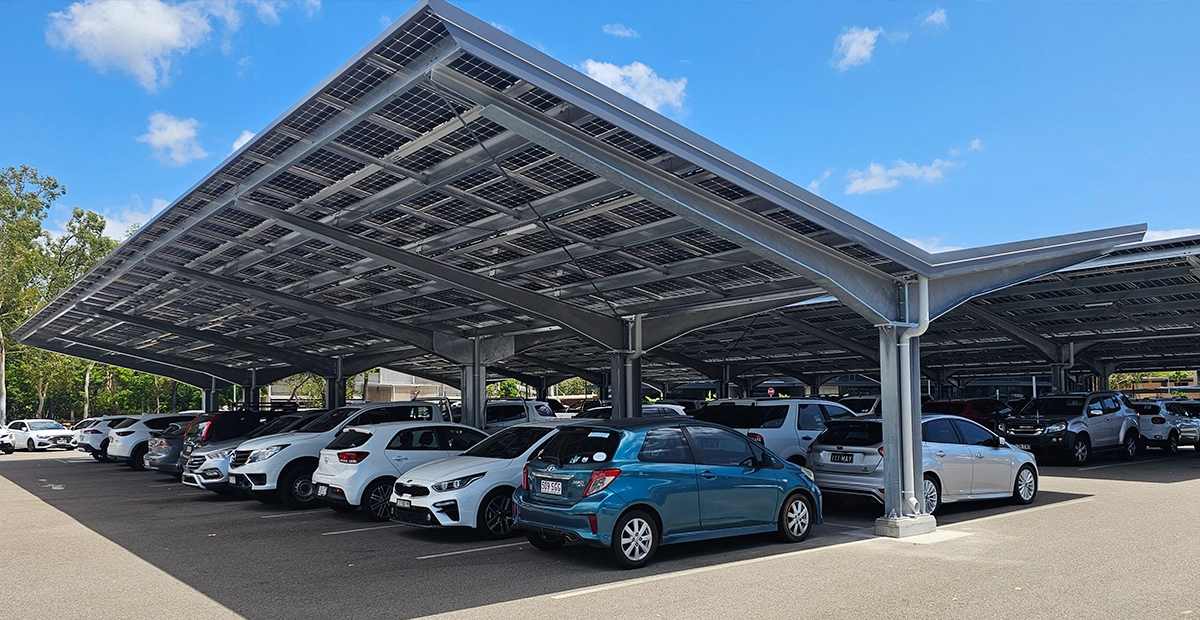
This is reflected in integrated cable pathways and water management, which support both performance and long-term durability. By managing these elements within the structure, the system maintains a consistent installation approach and reduces the need for additional modifications over time.
Tilt and orientation can also be configured to support effective solar harvest across different site conditions. These decisions are made at the design stage, ensuring the structure and the generation system operate cohesively.
Engineered for Australian conditions
Performance over time is closely linked to how infrastructure responds to environmental conditions.
EcoPort is designed with this in mind, including a Wind Region D classification, the highest rating for wind resilience in Australia. This supports deployment in exposed, coastal and cyclone-prone regions where structural integrity is a critical consideration.
Integrated water management further supports long-term performance by directing runoff and maintaining a controlled, weather-resistant finish. Together, these features position the system as durable infrastructure suited to demanding environments, rather than a lightly adapted installation.
Extending functionality within the same footprint
Because EcoPort is designed as a multi-purpose structure, it can also support additional site requirements without introducing separate installations.
Features such as EV charging, lighting and signage can be incorporated directly into the system, allowing these elements to be planned as part of a single piece of infrastructure. This supports a more consolidated approach to site design, where key functions are integrated rather than distributed across multiple standalone assets.
Making better use of established spaces
At its core, EcoPort is about increasing the utility of space that already exists. Parking areas are a consistent feature across commercial and industrial sites, but their functional contribution is typically limited to vehicle use. EcoPort extends that role by enabling those same spaces to contribute to onsite energy generation.
This does not alter how the site operates. Vehicles are still accommodated in the same way, and access remains unchanged. The difference is that the space now supports both operational and energy outcomes, within the same footprint.
A practical pathway to scalable solar
For operators looking to increase onsite generation, the ability to scale without disruption is an important consideration.
EcoPort’s modular design allows systems to be expanded in line with demand or staged investment, without requiring a complete redesign. This supports a more measured approach to solar deployment, where capacity can grow alongside operational needs. By integrating generation into everyday infrastructure, EcoPort provides a practical way to extend solar beyond traditional installation areas.
It reflects a more considered approach to energy systems, where infrastructure is designed to serve multiple purposes and contribute more directly to how a site performs over time. If you’d like to discuss how your operations could benefit from the EcoPort, reach out to our specialist team.